In recent years, the concept of cognitive enrichment for pets has moved from niche interest to mainstream practice among conscientious pet owners. The development of intelligence games, particularly those involving guided play with puzzle toys, represents a fascinating evolution in how we engage with our animal companions. These are not mere distractions; they are carefully crafted tools designed to stimulate problem-solving abilities, enhance emotional well-being, and strengthen the bond between human and animal. The shift towards this form of interactive play underscores a broader recognition of our pets' complex inner lives and their need for mental challenges alongside physical exercise.
The philosophy behind these intelligence games is rooted in the understanding that a pet's mind, much like our own, requires regular exercise to stay sharp. Boredom and under-stimulation can lead to a host of behavioral issues in both dogs and cats, from destructive chewing and excessive barking to anxiety and depression. Guided play with puzzle toys directly counteracts this by providing a constructive outlet for their natural curiosity and intelligence. It transforms passive downtime into an active learning experience, turning the living room floor into a dynamic classroom where every interaction is an opportunity for cognitive growth.
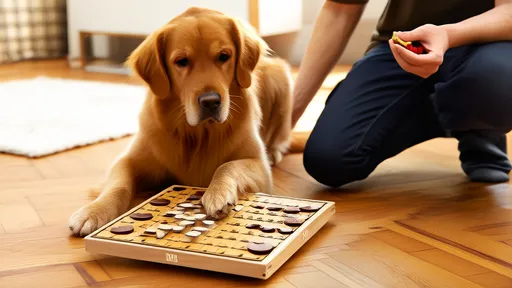
At the core of this movement are the puzzle toys themselves, which have undergone a remarkable transformation from simple rubber balls to sophisticated multi-step problem-solving devices. The modern pet intelligence toy is a feat of design, often requiring the animal to slide panels, lift flaps, spin wheels, or manipulate levers to receive a reward, typically a small treat or a portion of their kibble. The genius of these designs lies in their scalability; they can be introduced at a basic level for a puppy or kitten and gradually increased in complexity as the pet's skills develop, ensuring a consistently appropriate challenge.
Guiding a pet through these games is an art form in itself, requiring patience, observation, and a deep understanding of individual learning styles. The initial introduction is crucial. Owners must resist the urge to immediately show the solution, instead allowing the pet to explore the toy through sniffing, pawing, and nudging. This period of trial and error is where the most valuable learning occurs. A subtle nudge or a demonstration might be offered if the animal becomes frustrated, but the goal is always to let them arrive at the 'aha' moment independently. This process builds not just intelligence, but resilience and confidence.
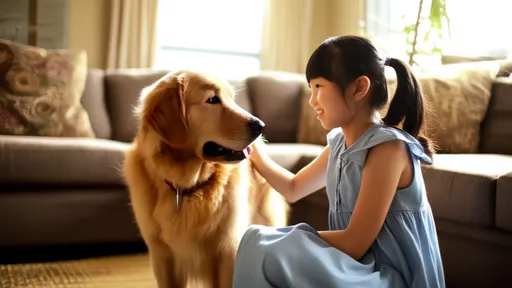
The benefits of this guided play extend far beyond a well-behaved pet. Neurologically, these activities promote the formation of new neural pathways, keeping the brain agile and potentially staving off cognitive decline in senior animals. The concentration required to solve a puzzle also has a profoundly calming effect, often working better than sedation for pets with high anxiety. Furthermore, the collaborative nature of the play—where the owner acts as a encouraging guide—forges a deeper, more communicative relationship. It establishes a language of cues and responses that enhances training in all other areas of life.
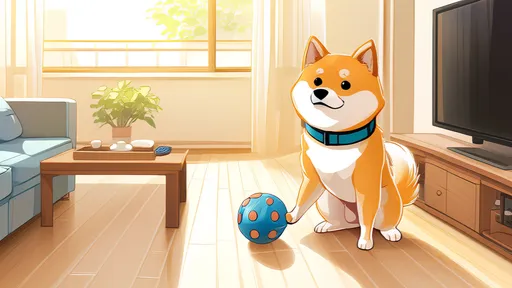
As the market for these products has exploded, so too has the diversity of available games. They now cater to species-specific instincts. For dogs, toys often involve foraging or hunting simulations, tapping into their innate desire to work for food. For cats, puzzles frequently engage their precision-pouncing and batting instincts, satisfying their predatory sequence in a safe indoor environment. There are even sophisticated electronic toys that can be controlled via smartphone, allowing an owner to engage their pet's brain with a treat-dispensing game even while miles away from home.
Looking forward, the frontier of pet intelligence games seems boundless. We are beginning to see the integration of technology that can track a pet's progress, adjusting difficulty in real-time based on performance metrics. Some developers are experimenting with toys that teach simple symbolic communication, blurring the line between play and language acquisition. The fundamental principle, however, will remain unchanged: honoring the intelligence of our pets by creating opportunities for them to think, learn, and succeed. This is more than a trend; it is a fundamental shift towards a more empathetic and enriching co-existence with the animals who share our homes and our lives.

By /Aug 20, 2025

By /Aug 20, 2025

By /Aug 20, 2025

By /Aug 20, 2025
By /Aug 20, 2025
By /Aug 20, 2025
By /Aug 20, 2025

By /Aug 20, 2025
By /Aug 20, 2025

By /Aug 20, 2025

By /Aug 20, 2025

By /Aug 20, 2025
By /Aug 20, 2025

By /Aug 20, 2025
By /Aug 20, 2025
By /Aug 20, 2025

By /Aug 20, 2025

By /Aug 20, 2025

By /Aug 20, 2025
By /Aug 20, 2025